
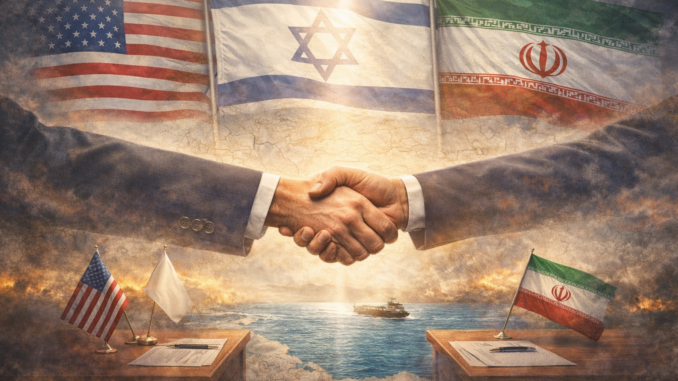

What’s at Stake
For more than five weeks, the war involving the United States, Iran and Israel has rattled global markets, destabilised the Middle East and raised the spectre of wider regional conflict. Amid escalating violence and diplomatic urgency, regional mediators have proposed a 45‑day US-Israel-Iran Ceasefire, a temporary pause that could lay the groundwork for a broader peace deal. But the plan remains uncertain and contentious.
What Is the 45‑Day Ceasefire Proposal?
The proposal being discussed by the U.S., Iran and regional mediators, including Pakistan, Turkey and Egypt, envisions an initial 45‑day pause in hostilities. This “first phase” is meant to reduce violence, reopen diplomatic space, and lead into follow‑up negotiations for a long‑term settlement.
Negotiators hope that a temporary truce could prevent a dangerous escalation, especially as President Donald Trump had set a deadline for Iran to open the strategically vital Strait of Hormuz or face further military strikes.
Why Now? The Clock Is Ticking
The ceasefire push is happening against a backdrop of:
- Trump’s looming deadline — demanding Iran reopen the Strait of Hormuz by a set Tuesday evening, or risk U.S. attacks on key infrastructure.
- Heavy strikes and retaliation — continued U.S.‑Israeli air attacks on Iranian facilities and Iran’s missile responses, leading to civilian casualties and rising regional tension.
- Global energy concerns — disruption around the Hormuz chokepoint has sent oil markets on edge, illustrating how high the economic stakes have become.
Not a Done Deal: Reality on the Ground
Despite the talks:
- President Trump has not approved the plan — a White House official said the ceasefire proposal is “one of many ideas” under consideration, and key military operations continue.
- Iran has pushed back — Tehran has rejected conditional temporary truces, including demands tied directly to reopening Hormuz, and insists any halt in fighting must come with guarantees against future attacks.
- Iranian officials view ultimatums as unacceptable, condemning threats of war crimes in speeches conveyed via state media.
What Would a Ceasefire Mean?
If agreed, a 45‑day ceasefire could:
- Provide a breather for civilians and combatants alike
- Allow time for expanded negotiations and confidence‑building
- Reduce the risk of large‑scale regional escalation
However, critics warn it could be fragile, temporary, and evolve into resumed conflict unless matched with strong diplomatic terms.
Obstacles to Peace
Several major hurdles remain:
- Mutual distrust — Iran distrusts demands linked to its sovereignty and control of Hormuz.
- Aggressive rhetoric — threats of infrastructure attacks by the U.S. fuel tensions.
- Israeli military posture — some Israeli sources remain skeptical of diplomatic progress and prepare for further operations.
Global Reactions and Risks
International leaders, including European officials, have urged de‑escalation and cautioned against further civilian harm, warning that instability could spread far beyond the Middle East.
Markets have responded to both hopes of a ceasefire and fears of continued fighting, reflecting how interconnected today’s geopolitics and global economy have become.
Conclusion: A Fleeting Window for Peace?
The 45‑day ceasefire proposal represents perhaps the most visible attempt yet to put diplomacy ahead of destruction in the U.S.–Israel–Iran conflict. But with deadlines looming, hard stances held on all sides, and no guarantee of consensus, whether this moment can truly calm the storm remains to be seen.